

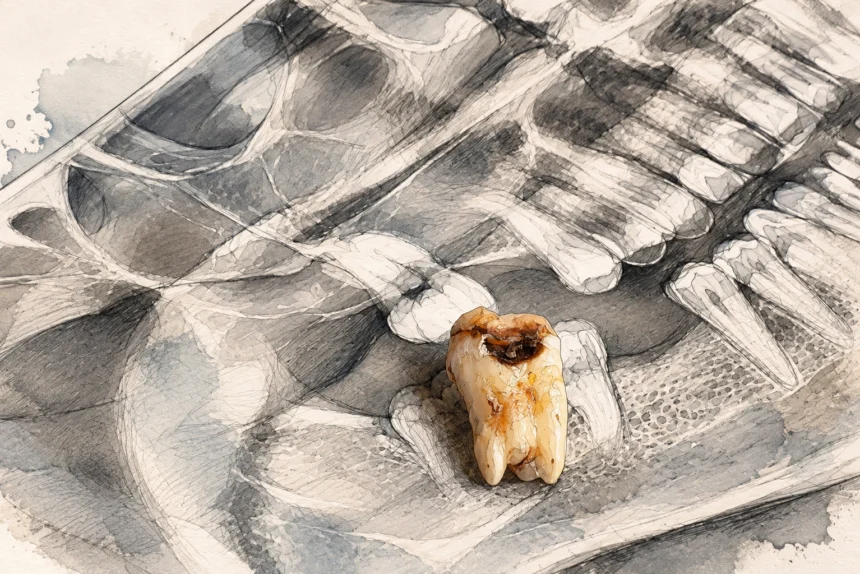
Wisdom teeth are the third set of molars that sit at the very back of your mouth. Most people have four of them, one in each corner of the jaw, but it is not unusual to have fewer or even none at all. They are called “wisdom teeth” because they tend to appear much later than the rest of your adult teeth, usually between the ages of 17 and 25, a period traditionally associated with growing maturity.
When Do Wisdom Teeth Start Forming Under the GumsHow to Recognize the Signs That Wisdom Teeth Are Coming InThe Four Ways Wisdom Teeth Can Come InWhy Some People Never Get Wisdom Teeth at AllThe Real Reason Wisdom Teeth Cause So Many ProblemsWhat Happens During a Wisdom Tooth EvaluationWhen Removal Is Recommended and When It Is NotThe Extraction Process: What Actually HappensDry Socket: The Complication People Fear MostWisdom Teeth and Orthodontic TreatmentCaring for Wisdom Teeth You Are KeepingWhat Research and Dental Experts Say About Wisdom Teeth TodayWisdom Teeth in Older AdultsFrequently Asked Questions About Wisdom TeethCan wisdom teeth grow back after being removed?Is it normal to have only two or three wisdom teeth?Can wisdom teeth affect your sinuses?Do wisdom teeth always need to be removed?Why do I still have jaw pain months after wisdom tooth removal?At what age is it too late to get wisdom teeth removed?A Practical Summary for Different Age Groups
From an evolutionary standpoint, these teeth once served a real purpose. Early humans ate a diet heavy in raw meat, roots, hard nuts, and coarse plant material. That kind of diet required serious grinding power, and a third set of molars helped do the job. As cooking developed and diets became softer, the need for extra grinding teeth decreased. Over thousands of years, human jaws also became smaller, but the genetic instruction to grow that third set of molars largely stayed in place. The result is a mismatch between jaw size and the number of teeth trying to fit into it.
Today, wisdom teeth are widely considered vestigial, meaning they no longer serve a critical function for most people. That said, not every wisdom tooth is a problem. Some people have jaws large enough to accommodate them, and those teeth come in straight and healthy with no complications at all.
| Fact | Detail |
|---|---|
| Number of wisdom teeth | Usually 4 (one per quadrant) |
| Typical age of eruption | 17 to 25 years |
| Classification | Third molars |
| Evolutionary role | Extra grinding for coarse diets |
| Modern function | Largely unnecessary for most people |
When Do Wisdom Teeth Start Forming Under the Gums
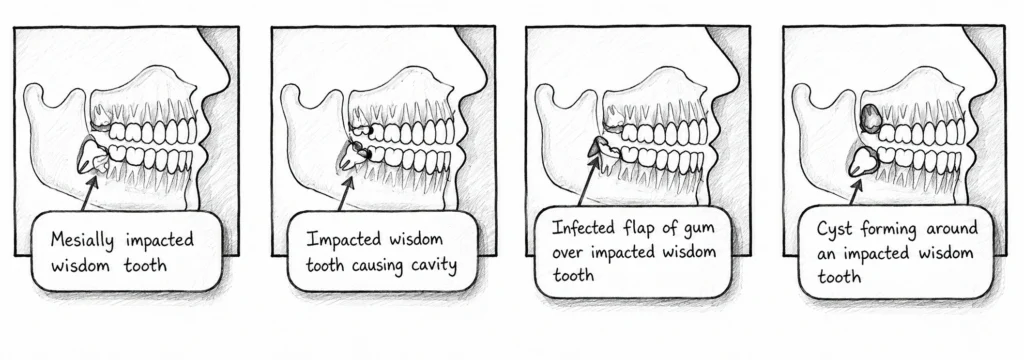
A lot of people think wisdom teeth suddenly appear in the late teens, but the formation process begins much earlier. The tooth buds for wisdom teeth start developing in the jaw during childhood, typically around age 7 to 10. At that stage, no one notices anything because there is no pain and nothing visible in the mouth yet.
By the early teenage years, the crowns of the wisdom teeth have usually formed fully beneath the gum line. The roots then continue to develop and lengthen through the mid to late teens. It is during this root development phase that the teeth begin pushing upward, which eventually leads to eruption or, in many cases, problems.
Dentists can track this process through X-rays long before any symptoms appear. A panoramic X-ray, the wide one that rotates around your entire head, gives a full picture of where the wisdom teeth are sitting, how they are angled, and whether they have enough room to come through. Most dentists recommend these X-rays during the mid-teens to get ahead of any potential issues.
The timing of eruption varies quite a bit from person to person. Some people see their wisdom teeth come through cleanly at 17. Others may not experience any movement until their mid-20s or even later. A small percentage of adults in their 30s and 40s can still have wisdom teeth erupt for the first time, though this is less common.
Stages of wisdom tooth development:
- Age 7 to 10: Tooth buds form in the jawbone
- Age 10 to 14: Crowns develop beneath the gum tissue
- Age 14 to 17: Roots begin to lengthen and teeth start shifting upward
- Age 17 to 21: Most common window for eruption
- Age 21 to 25: Later eruptions are still normal
- Age 25 and beyond: Any remaining unerupted teeth are monitored but may stay dormant
How to Recognize the Signs That Wisdom Teeth Are Coming In
The experience of wisdom teeth coming through varies widely. Some people go through the entire process with little more than mild discomfort for a few days. Others deal with significant pain, swelling, and disruption to daily life. Knowing what to watch for helps you identify what is happening and decide when to see a dentist.
The most common early sign is a dull aching sensation at the back of the jaw. This tends to come and go at first, and many people mistake it for general jaw tension or the effects of grinding their teeth at night. As the tooth moves closer to the surface, the ache usually becomes more consistent.
You may also notice the gum tissue at the very back of your mouth looking slightly raised, red, or puffy. This is the area where the tooth is pressing upward from beneath. Running your tongue along the back of your gum line, you might feel a small bump or a sharp edge just beginning to poke through. That feeling of a new edge is one of the clearest physical confirmations that a wisdom tooth is erupting.
Jaw stiffness, particularly in the morning, is another sign worth paying attention to. Headaches that seem to radiate from the jaw toward the temple area can sometimes be linked to wisdom tooth movement, though this is harder to attribute with certainty without a dental examination.
Some people also notice that their other teeth feel slightly different or that their bite feels off. This can happen when a wisdom tooth pushes against neighboring teeth as it tries to make room for itself.
Common signs of wisdom tooth eruption:
- Persistent aching at the back of the mouth
- Red or inflamed gum tissue behind the second molar
- A visible bump or sharp edge breaking through the gum
- Jaw stiffness, especially in the morning
- Headaches near the temple or ear
- Slight shifting of other teeth
- An odd or different feeling when biting down
The Four Ways Wisdom Teeth Can Come In
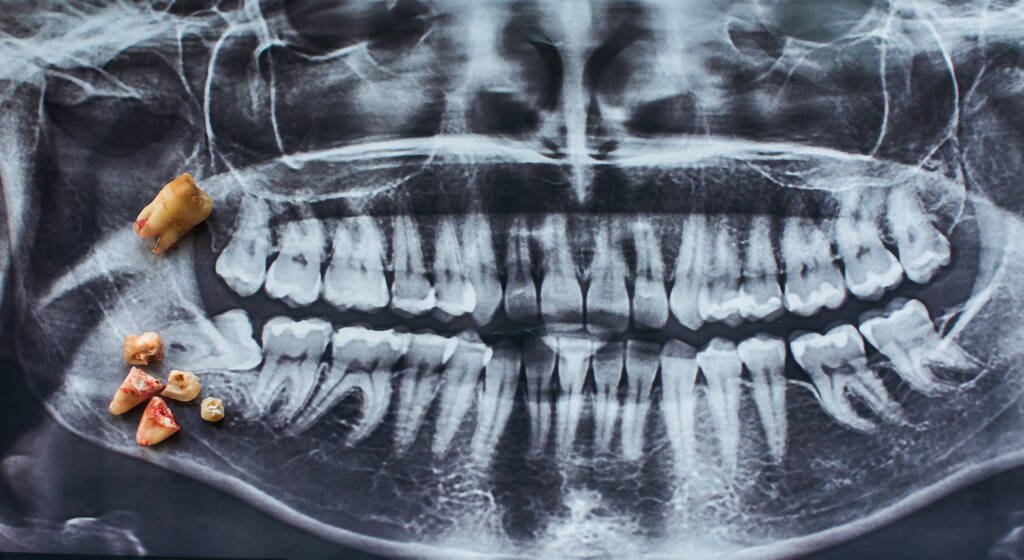
Not all wisdom teeth grow in the same direction or at the same angle. The position of the tooth when it erupts has a major impact on whether it causes problems. Dentists use the term “impaction” to describe cases where a wisdom tooth cannot fully emerge from the gum because something is blocking it, whether that is another tooth, the jawbone itself, or the angle of growth.
Vertical eruption is the ideal scenario. The tooth grows straight up, just like every other molar. If there is enough space, a vertically erupting wisdom tooth can become a fully functional part of your mouth with no complications. This is the outcome everyone hopes for, and it does happen regularly, just not for everyone.
Horizontal impaction is considered the most problematic position. In this case, the tooth is lying on its side, essentially growing sideways into the root of the second molar next to it. This can cause significant damage to the adjacent tooth and produces considerable pain. Horizontal impactions almost always require surgical removal.
Mesial impaction means the tooth is angled forward, toward the front of the mouth. This is actually the most common type of impaction. The tooth leans against the second molar, which can eventually cause decay or structural damage to that neighboring tooth if left untreated.
Distal impaction is the opposite, where the tooth angles backward, away from the rest of the teeth. This is the least common type. Distal impactions vary in severity and not all of them require immediate removal, though they still need regular monitoring.
Soft tissue impaction occurs when the tooth has pushed through the jawbone but not fully through the gum. Part of the crown may be visible, but a flap of gum tissue still covers part of it. This creates a pocket where food and bacteria get trapped easily, raising the risk of infection.
| Type of Eruption | Direction | Common Outcome |
|---|---|---|
| Vertical | Straight up | May function normally if space allows |
| Mesial | Angled forward | Most common impaction, presses on second molar |
| Distal | Angled backward | Less common, monitored individually |
| Horizontal | Lying sideways | Usually requires removal |
| Soft tissue | Partially through gum | High infection risk, monitoring needed |
Why Some People Never Get Wisdom Teeth at All
It is perfectly normal to not develop all four wisdom teeth. Some people have three, two, one, or none at all. Research suggests that a significant portion of the population, estimates range from roughly 5 to 37 percent depending on ethnicity and the studies referenced, is missing at least one wisdom tooth.
This is an example of human evolution still actively at work. The genes responsible for wisdom tooth formation are gradually becoming less common across the global population. Some anthropologists and dental researchers point to this as evidence that wisdom teeth are in the process of becoming obsolete over a very long evolutionary timeline.
Genetics plays the biggest role in whether you develop wisdom teeth. If neither of your parents developed them, your chances of also skipping them are meaningfully higher. Ethnicity also plays a role, with studies consistently showing lower rates of wisdom tooth development in certain East Asian populations compared to European or African populations.
The absence of wisdom teeth is not a deficiency or a health concern. It simply means your jaw and tooth development followed a slightly different genetic blueprint. If you reach your mid-20s and a panoramic X-ray shows no wisdom teeth forming, that is considered a complete outcome with no follow-up needed.
Factors linked to wisdom tooth absence:
- Family genetics, particularly parental history
- Ethnicity, with East Asian populations showing the highest rates of absence
- Evolutionary reduction over thousands of years
- Random variation in tooth bud development
The Real Reason Wisdom Teeth Cause So Many Problems
The core issue with wisdom teeth is not the teeth themselves. It is the space available for them. Over the course of human evolution, our jaws gradually became smaller, likely as a result of dietary changes that required less forceful chewing. Softer, cooked food put less mechanical stress on the jaw during development, which may have contributed to smaller jaw dimensions across generations.
The modern jaw often simply does not have enough room for a third set of molars. When a wisdom tooth tries to emerge into a crowded space, several problems can follow.
The most immediate is pain and swelling from the physical pressure of the tooth pushing through. But beyond the discomfort of eruption itself, the longer-term problems are what make dentists take wisdom teeth seriously.
When a wisdom tooth is partially erupted, the gum tissue around it forms a pocket that is nearly impossible to clean properly with a toothbrush or floss. Bacteria accumulate there and can cause a condition called pericoronitis, which is an infection of the tissue surrounding the tooth. Pericoronitis can cause severe pain, swelling that extends into the jaw and neck, fever, and difficulty opening the mouth or swallowing. In rare but serious cases, the infection can spread to other parts of the head and neck.
Impacted wisdom teeth can also cause damage to the roots of neighboring second molars. When a mesially or horizontally positioned tooth presses continuously against the root of the tooth next to it, it can cause root resorption, which is a process where the root tissue breaks down. This kind of damage can compromise the second molar structurally.
Cysts are another complication. Every unerupted tooth is surrounded by a follicle, a small sac of tissue. In some cases, this follicle fills with fluid and becomes a cyst. Dental cysts can quietly expand within the jawbone over years, hollowing out bone tissue and, in severe cases, affecting neighboring teeth and nerves.
What Happens During a Wisdom Tooth Evaluation
If you are in your late teens or early 20s, your dentist will likely bring up wisdom teeth during a routine visit even before you have any symptoms. The standard approach is to take a panoramic X-ray and assess the position, angle, and development of the teeth to determine whether they are likely to erupt cleanly or cause problems.
During the evaluation, the dentist looks at several things. They assess whether there is adequate space in the jaw for the tooth to erupt without crowding its neighbors. They look at the angle of the tooth and whether it is headed in a safe direction. They check the health of the surrounding bone and whether any follicular cysts are forming. They also evaluate the root development, since removing a wisdom tooth before the roots are fully formed is generally easier and carries fewer risks.
This evaluation is not a one-time event. Even if your wisdom teeth look fine at 17, they can shift in position as root development continues. Most dentists recommend monitoring with periodic X-rays every one to two years during the key development window.
Questions worth asking your dentist during a wisdom tooth evaluation:
- Are all four wisdom teeth present, or are any missing?
- What angle and position are each tooth currently in?
- Is there enough jaw space for them to erupt without causing crowding?
- Are there any signs of cyst formation around the follicles?
- Would you recommend monitoring, preventive removal, or waiting until symptoms appear?
- What is the root development stage, and does timing matter for any potential extraction?
When Removal Is Recommended and When It Is Not
There is an ongoing debate in the dental community about whether asymptomatic wisdom teeth should be removed preventively or left alone unless they cause a problem. Both positions have legitimate support, and the right answer depends on the individual case.
Removal is generally recommended when a tooth is impacted in a way that poses a clear threat to neighboring teeth, when pericoronitis has occurred more than once, when a cyst has formed around an unerupted tooth, or when crowding from the wisdom tooth is threatening the alignment of the rest of the teeth.
Preventive removal, taking out the teeth before any symptoms develop, is often recommended in the late teens or early 20s because younger patients generally heal faster and the procedure is technically easier when roots are not yet fully formed. The American Dental Association has supported a case-by-case approach, acknowledging that not every wisdom tooth needs to come out, while also noting that monitoring alone carries risks if problems are missed.
On the other side of the debate, some dental and medical organizations, including the UK’s National Health Service and the National Institute for Health and Care Excellence, have moved away from routine preventive extractions for teeth that are not causing problems. Their position is that the risks of surgery, however minor, are not justified when no symptoms or structural problems exist.
The clearest guidance is this: if your wisdom teeth are fully erupted, properly aligned, healthy, and you can keep them clean, there is no compelling reason to remove them. If any of those conditions are not met, or if your dentist sees warning signs on imaging, a more active approach is warranted.
Scenarios where removal is typically recommended:
- Tooth is horizontally or mesially impacted and pressing on neighboring roots
- Pericoronitis has occurred or the gum pocket is chronically infected
- A follicular cyst is present or expanding
- The tooth has caused decay in the second molar due to positioning
- The patient has orthodontic work that could be compromised by wisdom tooth pressure
- Pain and swelling have become chronic and are affecting quality of life
Scenarios where monitoring without removal is reasonable:
- Tooth is fully erupted and in a proper vertical position
- There is enough jaw space and no crowding of neighboring teeth
- The patient can maintain adequate hygiene around the tooth
- X-rays show no cysts, root damage, or structural concerns
- The patient is older and roots are fully formed with no active problems
The Extraction Process: What Actually Happens
Many people feel anxious about wisdom tooth removal, often because they have heard dramatic accounts from others. While the procedure is a surgery and deserves to be taken seriously, it is one of the most routinely performed dental procedures in the world, and the process is generally well-tolerated with proper preparation and aftercare.
Simple extractions are used when a wisdom tooth has fully erupted above the gum line and the roots are not deeply curved or fused to the bone. In these cases, the dentist loosens the tooth with a dental elevator and removes it with forceps. This is not very different from removing any other tooth, and recovery tends to be quick.
Surgical extractions are required for impacted teeth, meaning those that are partially or fully beneath the gum line or embedded in bone. The oral surgeon makes a small incision in the gum, may need to remove a small amount of bone to access the tooth, and often divides the tooth into sections for easier removal. The site is then closed with stitches that either dissolve on their own or are removed at a follow-up visit.
Anesthesia options vary. Most wisdom tooth removals are done under local anesthesia, which numbs the area completely so you feel pressure but not pain. Many patients, particularly those having multiple teeth removed at once or those with significant dental anxiety, choose to have the procedure done with IV sedation, which puts you in a deeply relaxed or semi-conscious state. General anesthesia is used in some cases, particularly for more complex surgical situations.
Recovery typically involves a few days of swelling, soreness, and dietary restriction. Ice packs applied to the face in the first 24 hours help reduce swelling. Soft foods, avoiding smoking, not drinking through straws, and keeping the surgical area clean are the key elements of aftercare.
Recovery timeline after wisdom tooth extraction:
| Timeframe | What to Expect |
|---|---|
| First 24 hours | Bleeding, swelling begins, rest recommended |
| Day 2 to 3 | Peak swelling, discomfort manageable with medication |
| Day 4 to 5 | Swelling begins to reduce, soft foods still necessary |
| Day 7 | Most people return to normal activities |
| 2 weeks | Gum tissue largely healed, stitches dissolve or removed |
| 1 to 3 months | Full bone healing in the extraction site |
Dry Socket: The Complication People Fear Most
Dry socket, known medically as alveolar osteitis, is the most common complication following a wisdom tooth extraction and also the one that causes the most distress. It occurs when the blood clot that forms in the extraction site is either dislodged or dissolves before the wound has properly healed. Without that clot, the bone and nerve endings in the socket are exposed to air, food, and bacteria.
The pain from dry socket is described by most patients as significantly more intense than the normal post-extraction discomfort and often radiates from the jaw toward the ear and neck. It typically appears two to four days after the extraction, which is when most people expect to be feeling better, making it particularly alarming when it happens.
The risk of dry socket is higher in smokers, people who use birth control pills, those with poor oral hygiene going into the procedure, and those who do not follow aftercare instructions carefully. Sucking through a straw, rinsing too aggressively in the first 24 hours, or touching the wound with fingers or tongue can dislodge the clot and trigger the condition.
Treatment involves the dentist cleaning the socket and packing it with a medicated dressing that provides pain relief and protects the exposed tissue. The dressing typically needs to be changed every few days until the tissue heals from underneath. Most cases of dry socket resolve fully with this treatment, though recovery takes longer than an uncomplicated extraction.
Steps to reduce the risk of dry socket:
- Do not smoke for at least 72 hours before and after the procedure
- Avoid drinking through straws for the first week
- Do not rinse vigorously on the day of the extraction
- Keep your head elevated when lying down to reduce blood pressure at the site
- Take prescribed antibiotics if given, for the full course
- Eat only soft foods and avoid anything small and hard that could lodge in the socket
- Do not probe the wound with your tongue or fingers
Wisdom Teeth and Orthodontic Treatment
One question that comes up regularly, especially among teenagers and young adults who have had braces, is whether wisdom teeth can cause previously straightened teeth to shift. This is a topic where dental professionals have not always agreed, and the science on it is nuanced.
For years, the conventional wisdom was that pressure from emerging third molars could push forward through the dental arch and cause the front teeth to crowd together again after orthodontic treatment. This idea led many orthodontists to recommend wisdom tooth removal as part of post-treatment maintenance.
More recent research has challenged this view. Studies tracking patients over time have found that tooth crowding after orthodontic treatment occurs in people who had their wisdom teeth removed and in people who kept them at comparable rates. The crowding appears to be driven more by the natural tendency of teeth to drift slightly over a lifetime, aging changes in the jaw, and how consistently patients wear retainers, than by wisdom tooth pressure specifically.
That said, there are cases where wisdom teeth do press against adjacent teeth and contribute to movement, particularly in patients whose jaws have less space. The current consensus among most orthodontists is that the relationship between wisdom teeth and post-treatment crowding is more complex than a simple cause and effect, and each case should be assessed individually.
If you have completed orthodontic treatment, the most reliable protection against tooth shifting is wearing your retainer as directed, regardless of whether your wisdom teeth are in or out.
Caring for Wisdom Teeth You Are Keeping
If your wisdom teeth have come in cleanly and your dentist has cleared them as healthy, they require the same level of care as every other tooth in your mouth, with a few extra considerations given their position at the back of the jaw.
Brushing the back surface of wisdom teeth is something most people do not do effectively. Because these teeth sit at the very rear of the mouth, standard brushing technique often misses the back face of the tooth entirely. Using a soft-bristle brush angled toward the back of the mouth, making small circular motions, and taking extra time on those rear surfaces makes a significant difference.
Flossing between the second molar and the wisdom tooth is also important and often skipped. A floss threader or water flosser can help reach that area more easily than traditional floss alone. The gum tissue behind the wisdom tooth should also be included in your cleaning routine since bacteria accumulate there readily.
Regular dental X-rays remain important even when wisdom teeth are healthy. These teeth are prone to developing cavities on their back surfaces simply because they are hard to clean and difficult to see. Catching decay early in a wisdom tooth is far preferable to dealing with an advanced cavity in a tooth that is already difficult to work on due to its position.
Oral hygiene habits for healthy wisdom teeth:
- Brush the rear surface of the wisdom tooth with intentional back-angled strokes
- Floss the space between the second molar and wisdom tooth at least once daily
- Use a water flosser to flush bacteria from the gum pocket behind the last molar
- Have X-rays taken at least every 12 to 18 months to catch any silent decay
- Watch for swelling, bad taste, or persistent soreness, which can signal early pericoronitis
- Tell your dentist if you notice any changes, even minor ones, in how those teeth feel
What Research and Dental Experts Say About Wisdom Teeth Today
The science around wisdom teeth has advanced considerably over the past two decades, moving away from blanket recommendations toward more individualized care. Dr. Greg Huang, a professor and chairman of orthodontics at the University of Washington, has noted in dental literature that the relationship between third molars and anterior crowding is far weaker than was traditionally assumed, and that removal based solely on the crowding risk alone is not well-supported by evidence.
Research published in the American Journal of Public Health raised concerns about routine preventive extractions, estimating that a substantial number of wisdom tooth removals performed each year are done on teeth that would never have caused problems. The study called for more conservative and evidence-based criteria before recommending surgery.
On the other side, a long-term study published in the Journal of Oral and Maxillofacial Surgery followed patients who chose to keep their impacted wisdom teeth and found that a meaningful percentage of them eventually developed problems requiring extraction, often with more complex surgical situations due to the patients’ older age at the time.
The current direction in dental practice is toward shared decision-making, where the dentist presents the imaging findings and risk factors clearly, explains the likely outcomes of both action and watchful waiting, and the patient makes an informed choice based on their own circumstances and preferences.
Wisdom Teeth in Older Adults
Most discussions about wisdom teeth focus on teenagers and young adults, but the issue does not always resolve itself in that age group. Some adults enter their 30s, 40s, and beyond with unerupted wisdom teeth that have been quietly sitting in the jaw for decades.
For these older patients, the calculus around removal changes somewhat. On one hand, an asymptomatic, fully impacted wisdom tooth surrounded by healthy bone that has not caused any problems in 20 years may be perfectly reasonable to leave in place. Many dentists take the position that if a tooth has not caused trouble by the mid-30s, it likely will not.
On the other hand, if an older adult does need a wisdom tooth removed, the procedure tends to be more involved. Bone density increases with age, making the extraction physically harder. The roots of older wisdom teeth are typically fully formed and more likely to be curved or fused to the bone, which increases the complexity of surgical removal. Recovery also tends to take longer in older patients.
This does not mean that wisdom tooth removal in older adults is unsafe or inadvisable. Oral surgeons perform these procedures on older patients routinely with good outcomes. It simply means the risk-benefit analysis is different and deserves careful discussion with a specialist.
Frequently Asked Questions About Wisdom Teeth
Can wisdom teeth grow back after being removed?
No. Once a tooth is extracted, it does not regrow. However, a small number of people have supernumerary, or extra, teeth, and in rare cases an extra fourth molar bud behind a removed wisdom tooth could eventually erupt. This is extremely uncommon.
Is it normal to have only two or three wisdom teeth?
Yes, entirely. The number of wisdom teeth you develop is genetic. Having two, three, or none is a normal variation and does not indicate a health problem.
Can wisdom teeth affect your sinuses?
The upper wisdom teeth sit close to the maxillary sinuses. In some cases, their roots can extend near or into the sinus cavity. This can cause sinus pressure, congestion, or pain that might be mistaken for a sinus infection. After removal of upper wisdom teeth, there is a small risk of a temporary opening between the extraction site and the sinus.
Do wisdom teeth always need to be removed?
No. Wisdom teeth that are fully erupted, properly aligned, and can be kept clean do not need removal. The decision should be based on individual circumstances, imaging, and a thorough discussion with a dental professional.
Why do I still have jaw pain months after wisdom tooth removal?
Some residual jaw stiffness after a significant extraction is normal, particularly if the procedure involved substantial bone removal. However, persistent jaw pain months later can indicate a temporomandibular joint issue, a developing infection, a nerve complication, or incomplete healing, and should be evaluated by a dentist or oral surgeon.
At what age is it too late to get wisdom teeth removed?
There is no strict age cutoff. Wisdom teeth can be removed at any age when the clinical situation warrants it. The procedure simply becomes more involved as patients get older due to bone density and root development, so recovery and complexity should factor into the decision.
A Practical Summary for Different Age Groups
The approach to wisdom teeth shifts depending on where you are in life, and having a clear picture of what makes sense at each stage helps you make good decisions.
| Age Group | Recommended Approach |
|---|---|
| Age 14 to 16 | First panoramic X-ray to assess tooth bud development and positioning |
| Age 17 to 21 | Active monitoring with X-rays every 1 to 2 years, discuss removal if impaction is clear |
| Age 22 to 25 | Evaluate erupted teeth for hygiene, assess any remaining impacted teeth |
| Age 26 to 35 | Stable impacted teeth with no history of problems can often be monitored |
| Age 35 and beyond | Removal only if symptoms, infection, or structural damage develops |
The most important takeaway is that wisdom teeth are not automatically a problem, but they are never something to completely ignore either. Regular dental visits, honest conversations with your dentist about what the X-rays show, and good oral hygiene habits around those back teeth are the foundation of managing them well. Whether they stay or come out, the goal is the same: a healthy mouth and a jaw that functions without pain or complication for the long term.